

SURVIVAL CONDITIONS
Thoughts on the evolving needs of individuals, organizations, and the systems they operate within

Ever since Hippocrates recognized that human health is determined by natural and environmental causes, and not by impetuous gods, our understanding of what we need to survive has been evolving. And while his revelation looked a lot like the roots of medicine, it was actually the relocation of responsibility from lofty deities to human agency. Survival had logical conditions—and those conditions could be understood, tended, and improved.
Since then, our definition of what it takes to stay alive has steadily expanded, not because earlier thinkers were wrong, but because we continue to learn about human needs in an increasingly complex society.
We accept now that survival depends on food, water, and shelter; and that it also depends on social order and protection from violence; and on biological adaptability and fit with changing environments; and on psychological safety, belonging, and meaning. More recently, we’ve begun to understand survival as a property of whole systems—ecological, social, economic—and of relationships that extend beyond the human world.
Across centuries, the list of essentials has grown from resources or things, to structures, to systems, or conditions. Since those conditions are fractals, they repeat across scales: what allows an individual to survive is not fundamentally different from what allows an organization, a society, or a planet to survive. The parts cannot outlive the whole.
Which brings us to now.
E. O. Wilson’s often quoted observation that we have Paleolithic emotions, medieval institutions, and god-like technology isn’t just a clever diagnosis; it’s a formula for our daily reality. The gap he named has widened. Our tools act faster and farther than our wisdom, our emotions are tearing us apart and our institutions strain under pressures they were never designed to hold.
One mistake we make is to treat these needs as binary outcomes: present or absent, solved or unsolved. Survival isn’t something we achieve, though, it’s a condition we maintain, with ongoing attention and balance.
A more dangerous mistake is that, in the face of complexity, we seem to be surrendering the agency Hippocrates claimed for us. We increasingly behave as if our god-like (but impetuous) technologies will save us from the problems we’ve created rather than treating them like tools that need even more vigilant human judgment. This doesn’t feel like progress; it feels more like a regression to magical thinking, where fate and responsibility are quietly abdicated.
We can see the same pattern in business. Resources—both financial and natural—are more dear. Structures are under pressure from chaotic regulation and unpredictable change. Conditions that support coordinated action, like trust, connection and community, are elusive at best. We respond by speeding up, measuring harder, tightening control, and narrowing options. In doing so, we weaken the capacities survival requires.
What we can and cannot do.
We’ve proven we’ve got the ability to do just about anything we have the collective mind to accomplish. Our success depends above all on our ability to define and align behind a shared purpose which, let’s face it, ought to be easy if we put system-survival (including, but not limited to us) first. After that, it depends on our capacity to collaborate, adapt, change course as needed and keep doing it again tomorrow. All things we already know how to do, and can get better at with practice.
The only thing we can’t do is meet these needs in isolation. In solitude, feedback becomes recycled air, perspective narrows, curiosity is eliminated through break-neck deadlines. We repeat old mistakes faster, confuse control with stability, efficiency with innovation.
The real conditions for survival require experimentation, collaboration and dissemination. We can find these conditions in some communities, organizations and even countries we admire. They can be also be developed in any well-conceived cohort with diverse voices and shared values.
What we’re doing.
At CommonWise, we’re building cohorts across sectors, industries and organizations: structures that change how people think and work together, then multiply their effectiveness by spilling out into the larger circles those participants influence.
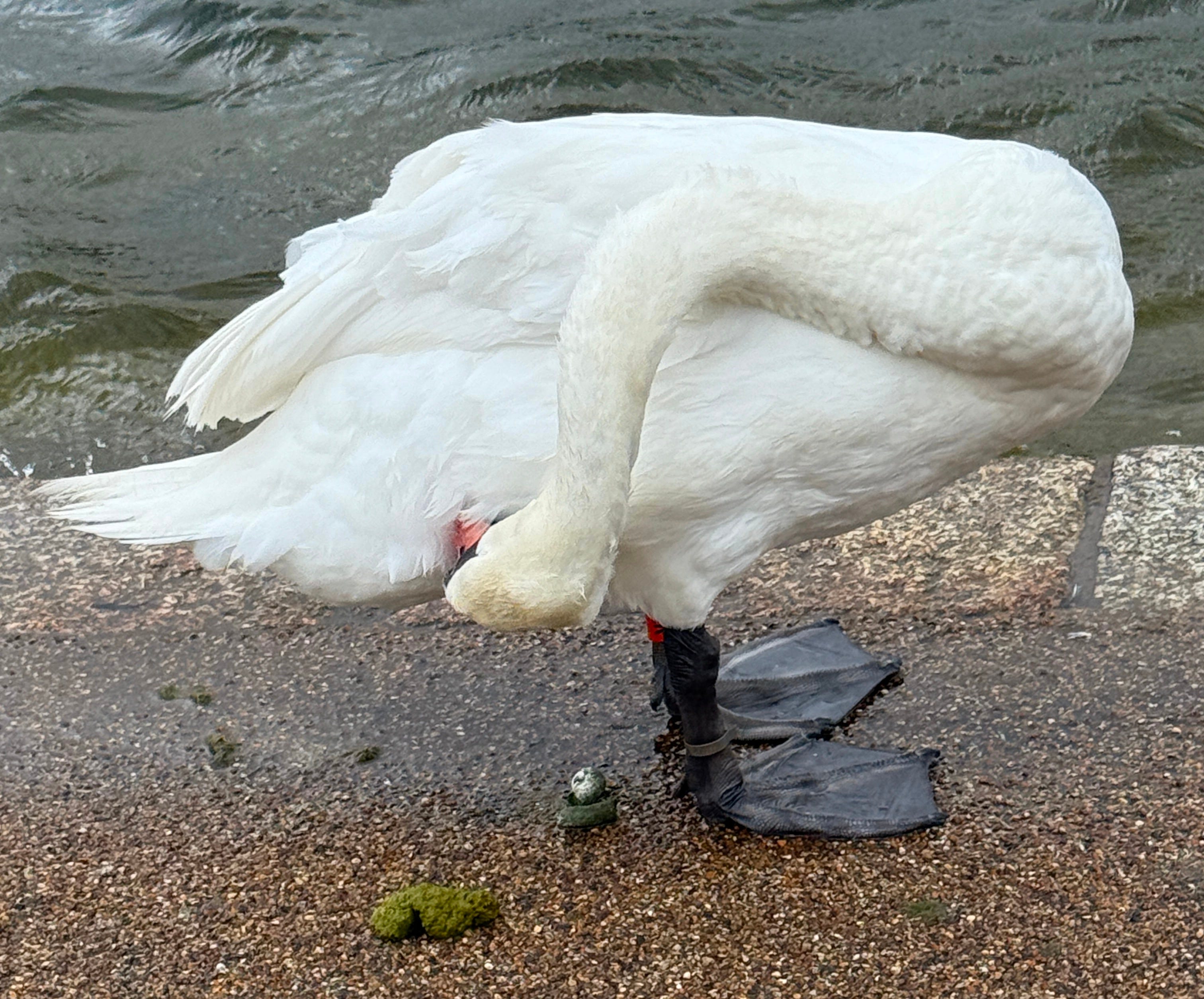
A friend just reminded me that my outlook is sobering. That feels both fair and appropriate. But it is also one of hope, acquired by working with extraordinary people, from CEOs, EDs, founders and Deans to pregnant women in Sierra Leone, product and service innovation teams, global comms and marketing officers and youth in the U.S. foster system. I believe, more than anything else, in the creative agency of humans and nature herself. Like the Mute Swan in London, I try to stay connected to what’s behind me but focus on what can be created next.
In his wonderful book, Alphie & Me, Carl Safina says that the purpose of life is to connect to it. That’s the invitation we’re putting forth.
Please let us know what you think and get in touch to learn more.
*Thank you Hippocrates, Aristotle, Hobbes, Darwin, Maslow, Donella Meadows and all Indigenous knowledge systems.
Connecting people, ideas, and capacity across traditional boundaries is what we need. We have transcended the usefulness of hyper specialization. It is time to come back into community.